Waiting in the Between
Site-specific installation | 2025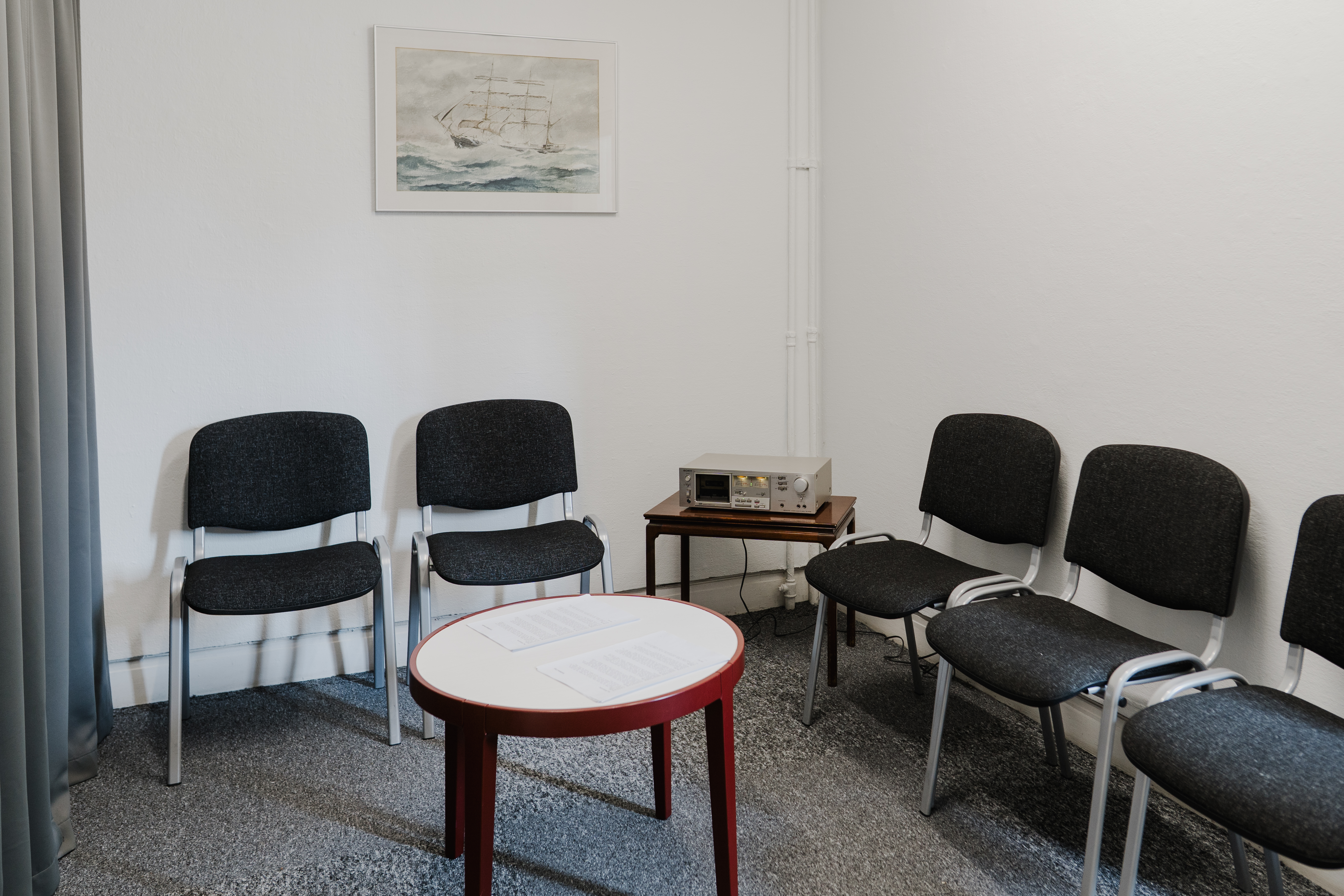
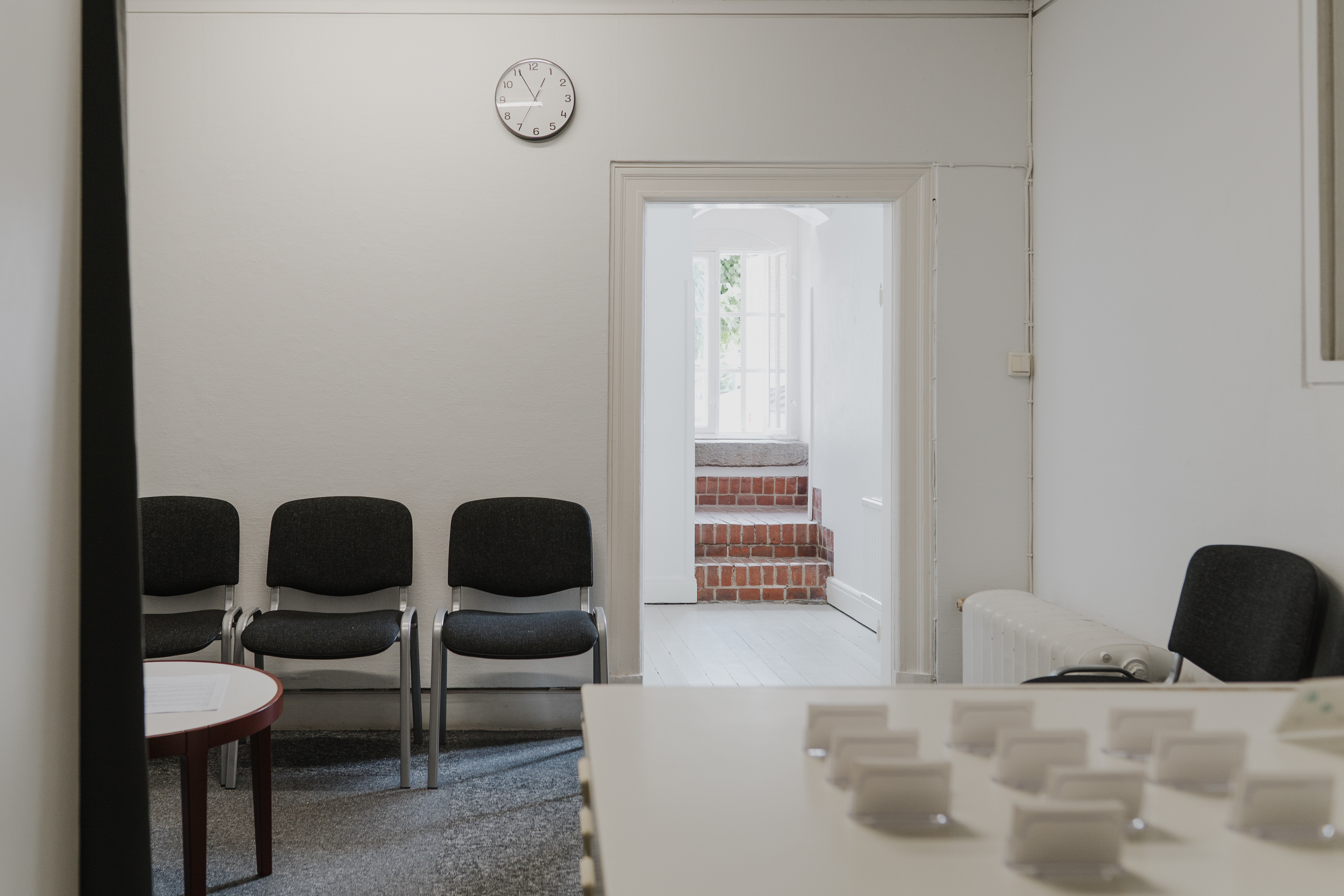
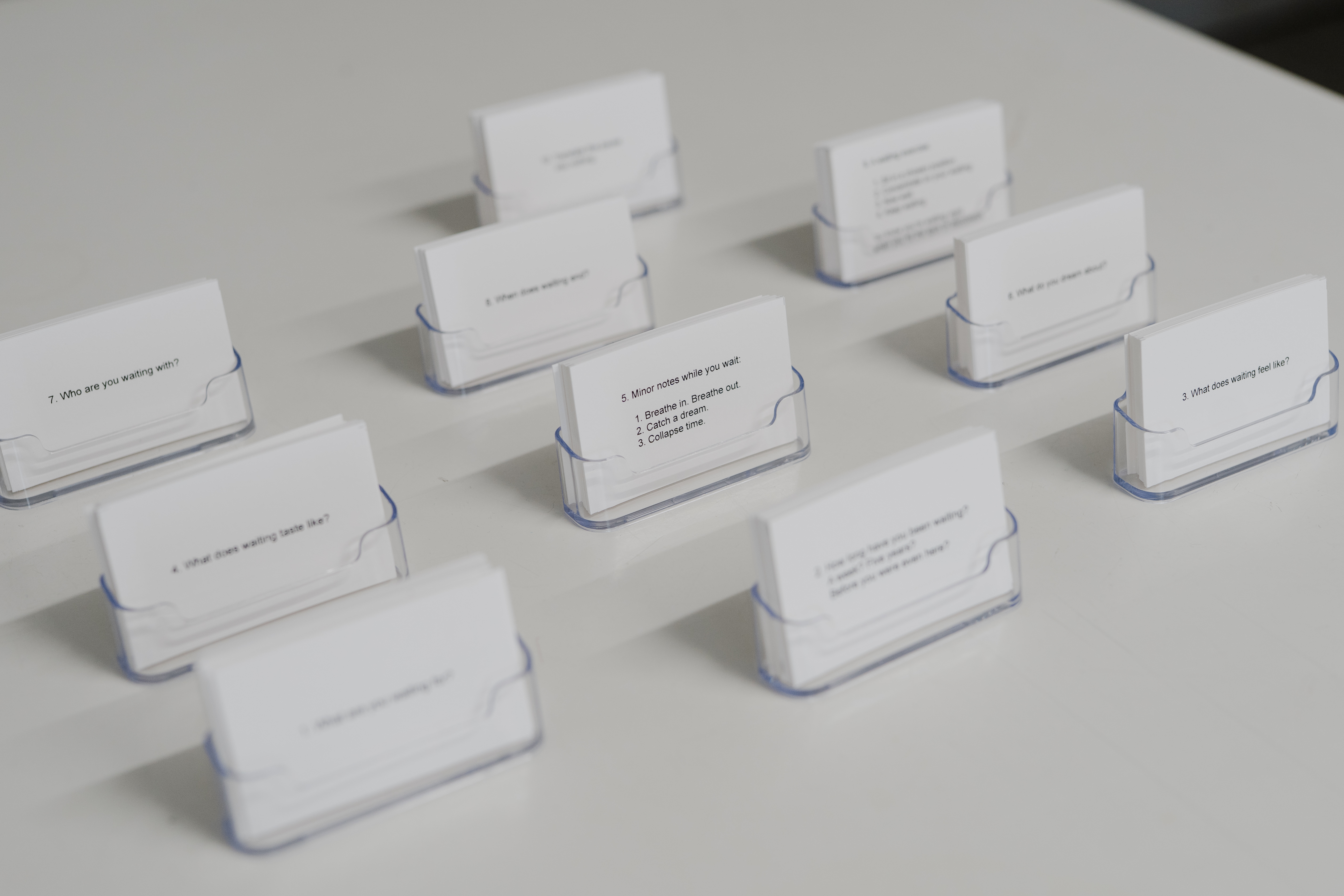
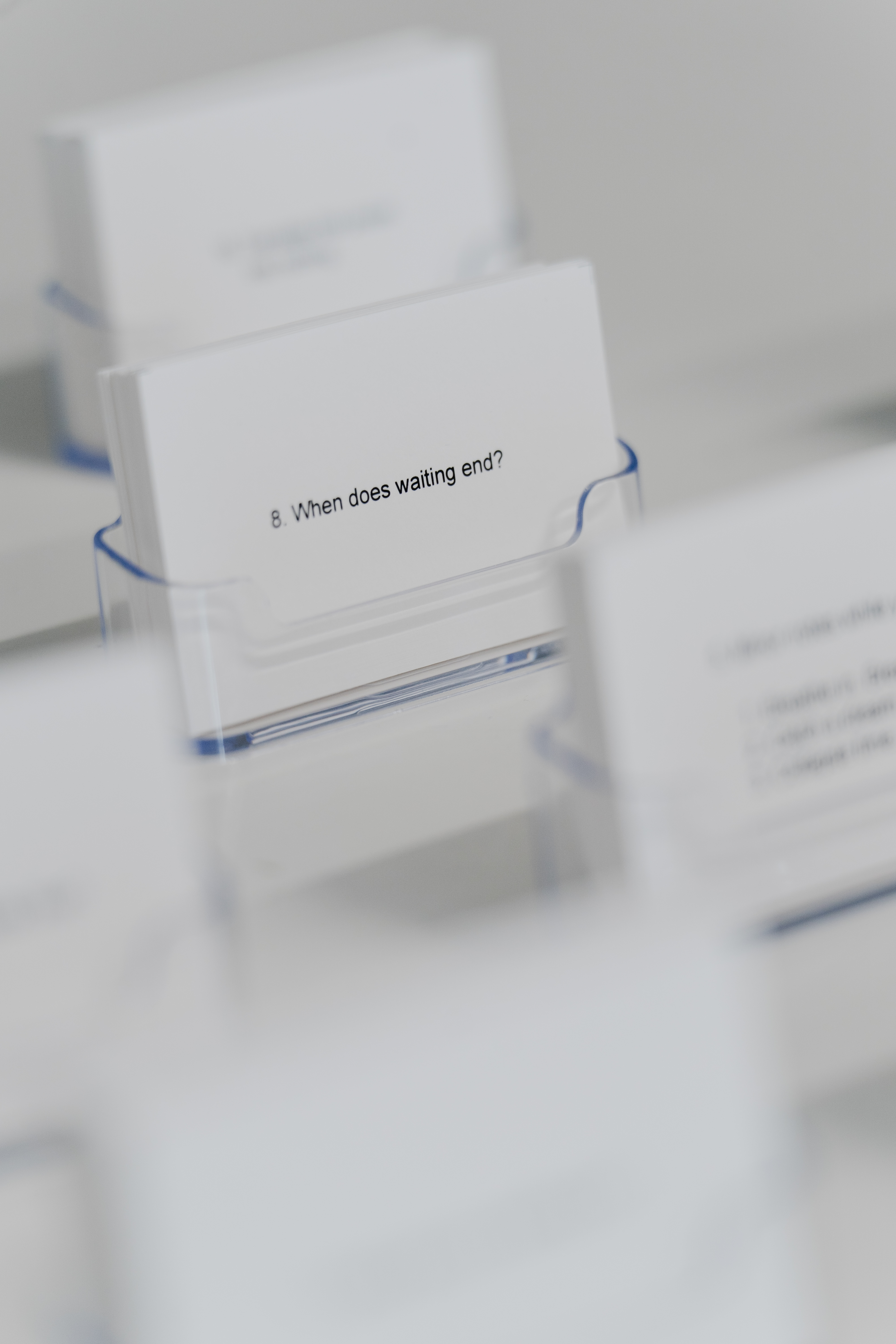
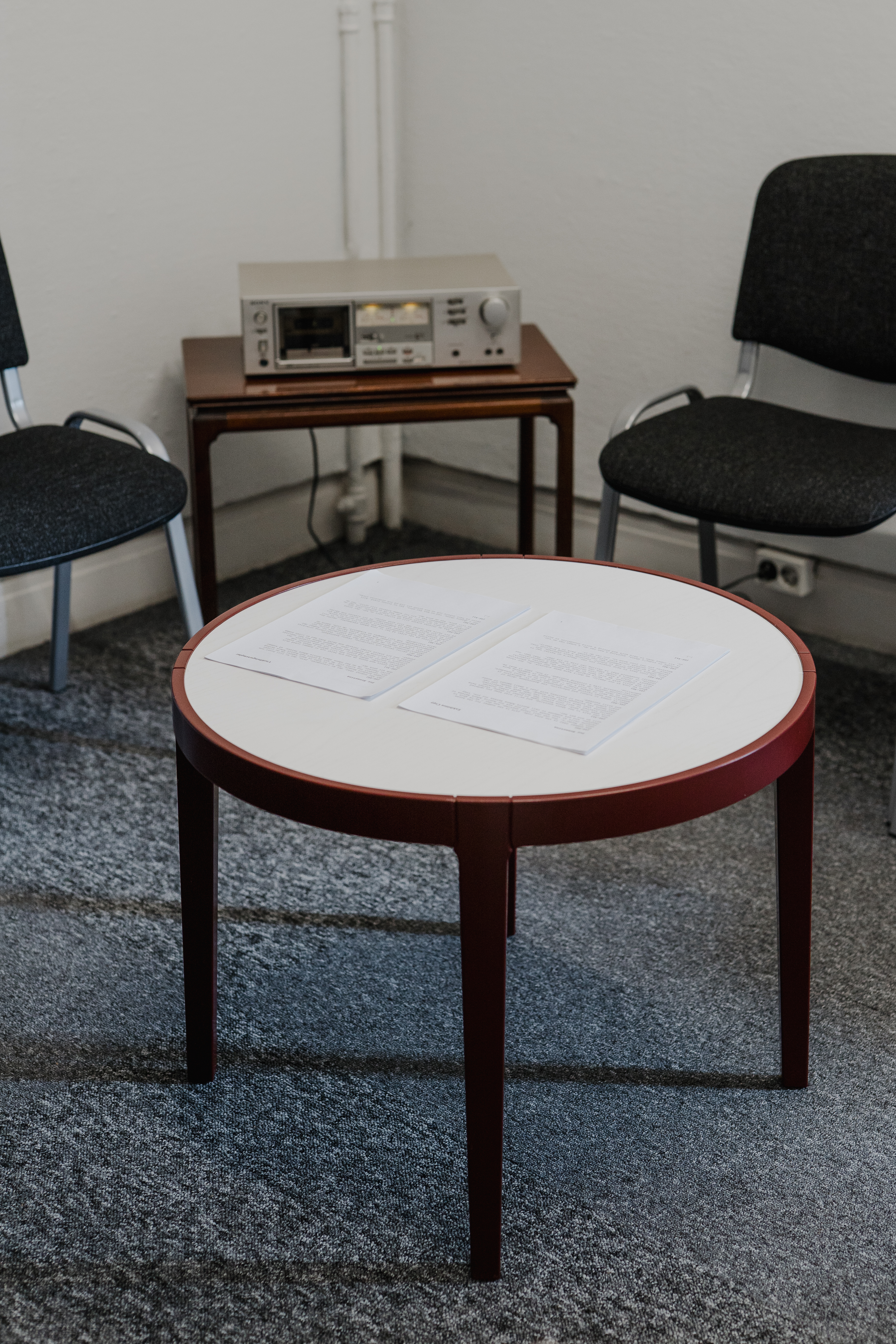
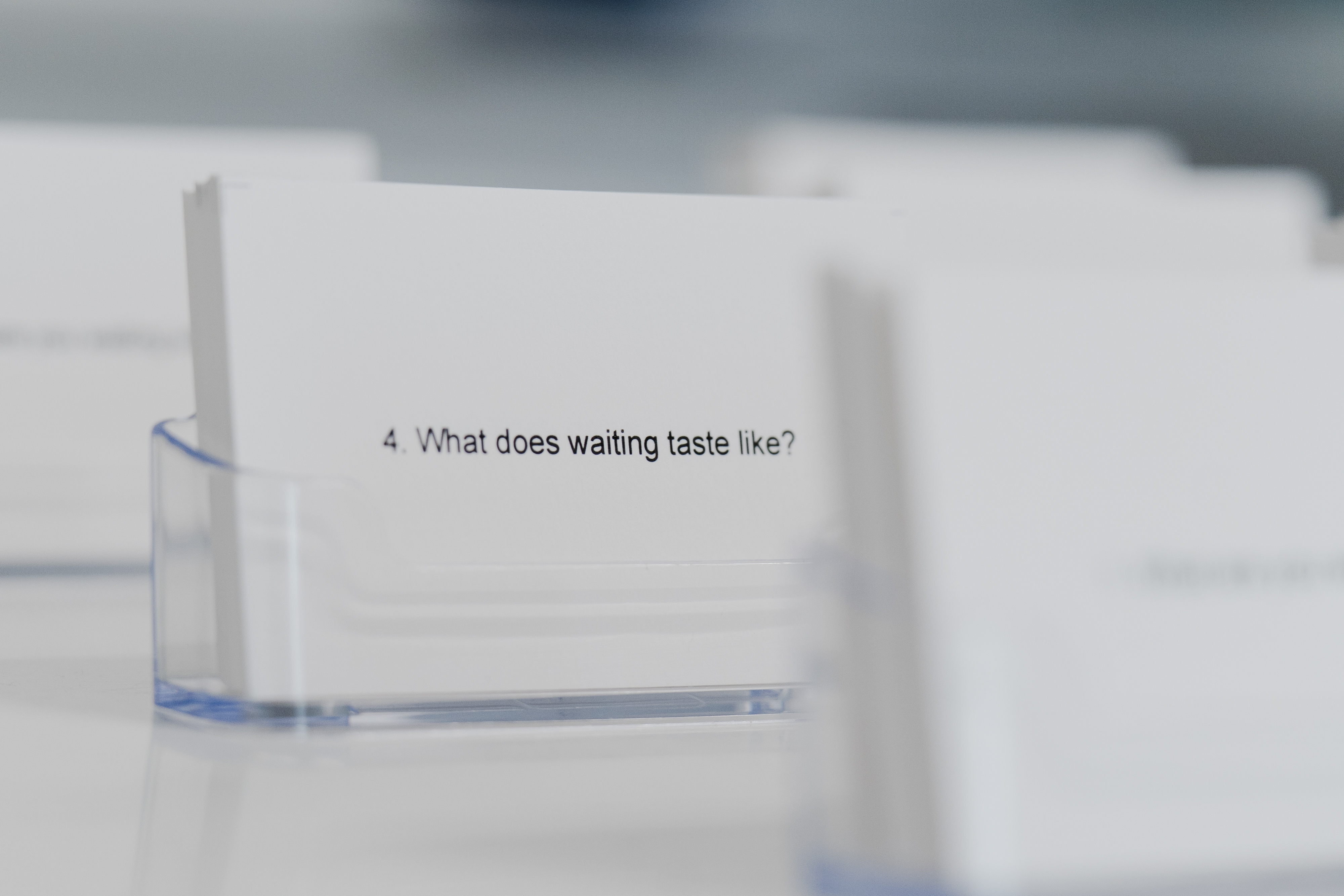
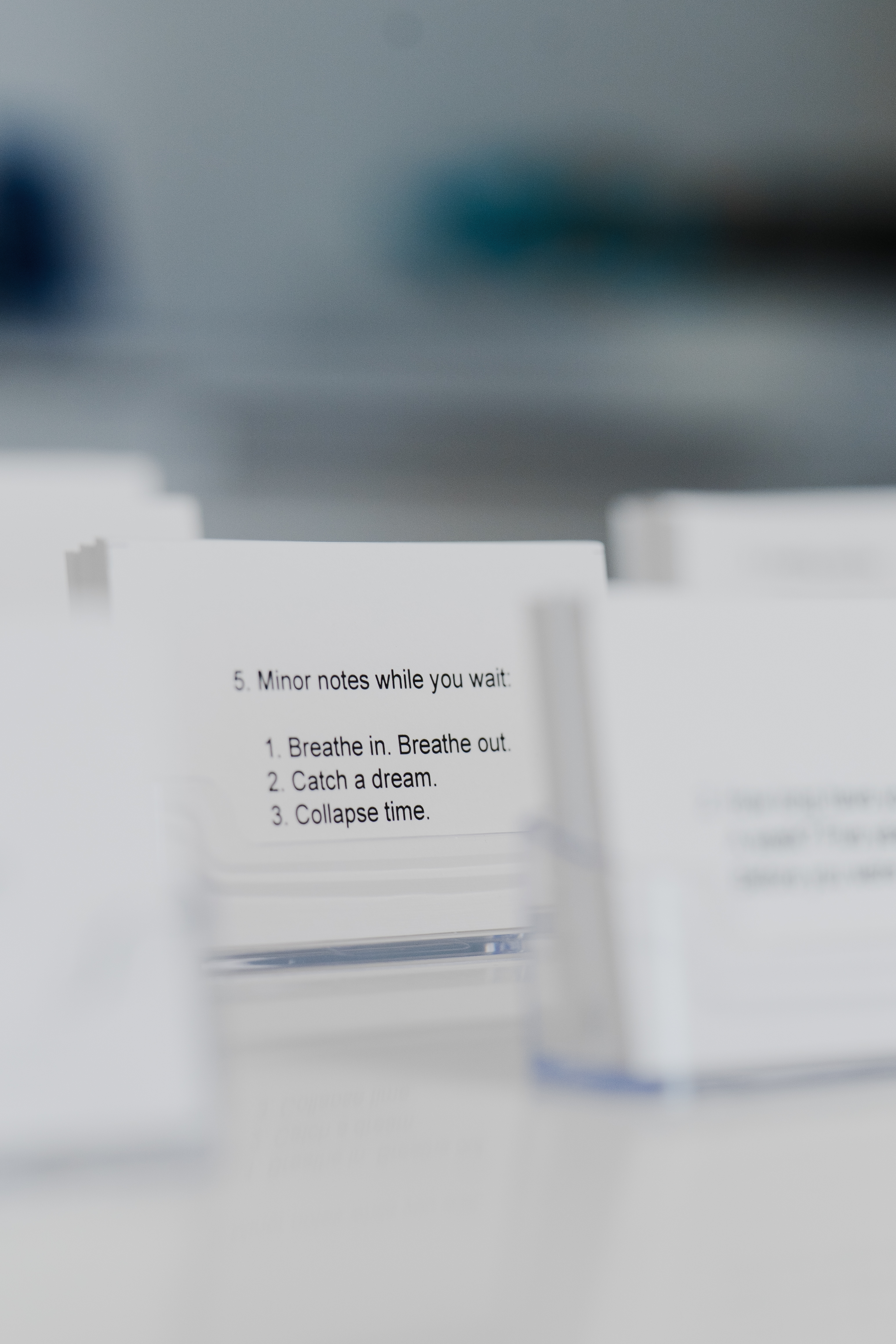
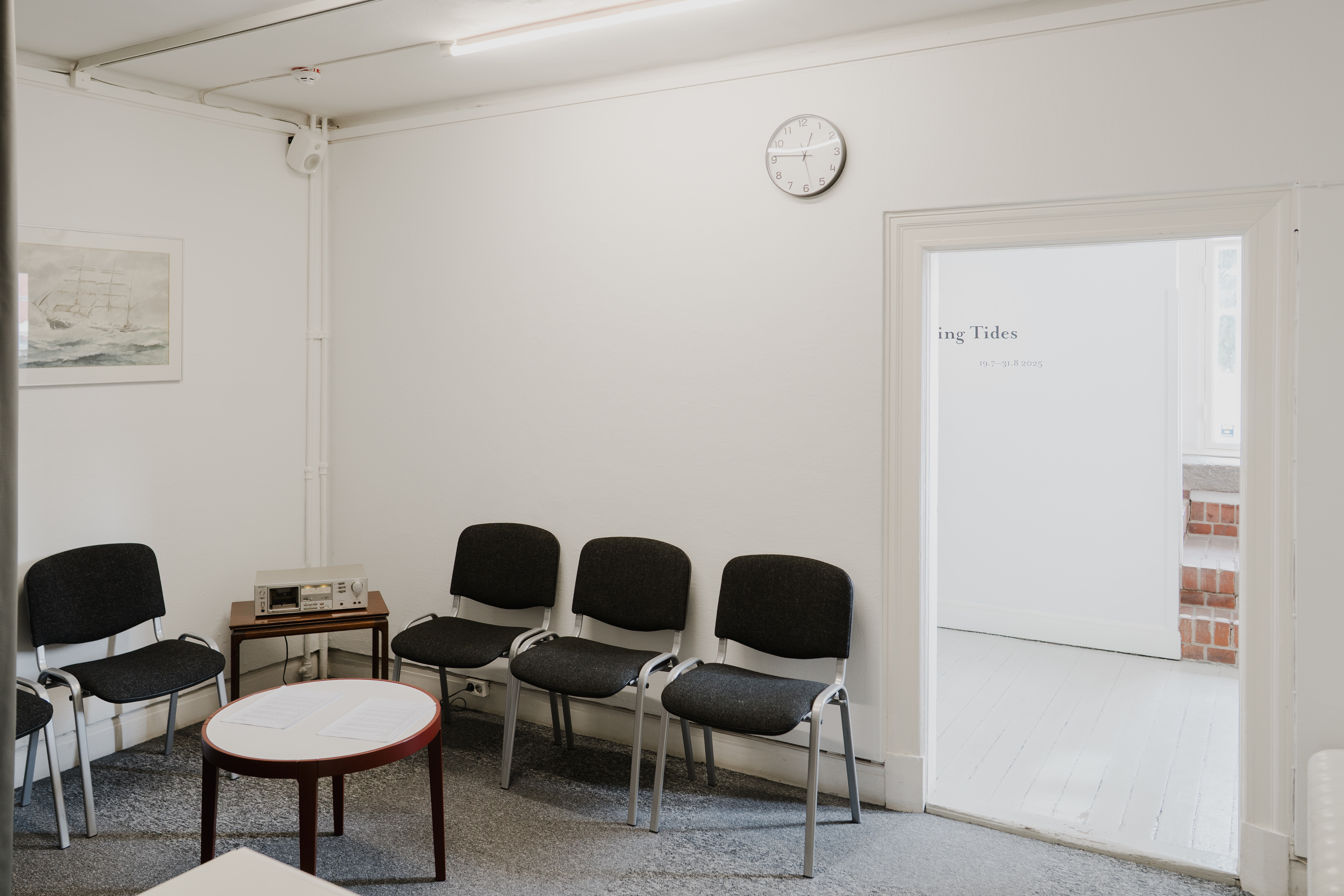
Waiting in the Between adopts the structure of a waiting room to examine waiting as a condition produced by bureaucratic systems of migration and recognition. Seating, sound, text, carpet, curtains and lighting establish an environment of regulated yet indeterminate time. At the center of the installation, For Ernestina plays from a cassette tape sent to the artist’s mother. The recording is in Twi and only partially translated, positioning language as both intimacy and protection. A nautical watercolor introduces a maritime reference that situates bureaucratic waiting within longer histories of movement and passage. Text prompts in Waiting Guide provide minimal, open-ended instructions. Together, the elements frame waiting not as interruption but as an ongoing, embodied condition shaped by migration, administration, and deferred futures. The installation was developed as part of the solo exhibition, Waiting Tides.
Works featured in the installation:
1.For Ernestina (2025)
Sound work (cassette tape, cassette player).
Audio with transcript and translation
10.00 min audio, 10.00 min interval
2. Nautical painting (1993)
Unknown artist(signed “Honkaharju”)
Watercolor on paper
57 x 77 cm
3.Waiting Guide (2025)
Text prompts on cards
Exhibition text
Waiting Tides is a solo exhibition by Jonelle Twum. The exhibition unfolds as site-specific installations across three floors, tracing gestures of water, language, and memory. At its core is the sea — the Atlantic — not as backdrop, but as restless witness, elemental carrier,and unmarked grave. It is a living archive, holding the afterlives of slavery, migration, and the generational condition of waiting in its shifting tides and sedimented histories.
The exhibition draws from the resonances of the Black Atlantic, where memory is fluid, submerged, and constantly in motion.The sea is not silent. It remembers. It breathes, holding those lost during the Middle Passage in molecular, mythical, and ancestral form — present in salt, in coral, in current. Its tidal pull shapes the contours of the exhibition, folding in personal and political histories.
Threaded through these installations is the artist’s mother’s migration to Sweden — a crossing shaped by deferred futures,withheld recognition,and the slow violences of bureaucracy. Her voice becomes a vessel, a tide of its own, where personal experience merges with broader currents of displacement, refusal, and survival. Each floor evokes a distinct yet interconnected note. On the ground floor, a speculative soundscape rises from the seabed. A shimmering black carpet turns the space into a submerged world, where molecule and myth coexist. Language drifts — abstracted,fragmentary, echoing as if underwater. The first floor stages a waiting room — familiar, measured, and unsettling. A cassette tape sent to the artist’s mother plays in Twi — partially translated, partially withheld — its omissions as protection. The second floor turns inward. A video work weaves archival footage of the artist’s mother in anticipation of her migration to Europe. Here, language appears in absence, and silence becomes its own form of speech. On the same floor, a patchwork of ID photos — expired, altered, blank — form terrain of bureaucratic remains, an archive of the self, suspended in systems of recognition.
Rather than offering resolution, Waiting Tides gathers atmospheres and relations. It listens to voices that echo without declaring themselves. It considers how language can become protection,how absence might be a form of presence, how waiting, like the sea, holds its own quiet knowledge. It is in the space between the drowned and the living, between memory and speculation, between the inhale and the exhale, that Waiting Tides takes shape — shifting with every return.
Credits
Technician: Jesper Veileby
Sound mix (For Ernestina): Kristian Eliasson
Exhibition text (Suspended time — Black Liquid Breath): Marie-Louise Richards
Curatorial support: Tawanda Appiah
Installation assistant: Tere Falomir
Graphic design: Linda Hallstan
Documentation: Loc Vo
Krognoshuset team:
Supervisor/Curator: Jin Hwa Borstam
Exhibition Guide: Julia Andersson